— TUTORIAL
Why Your Pour-Over Tastes Bitter (And How the Bloom Phase Fixes It)
If your hand-poured coffee tastes ashy or harsh, the fix probably isn't your beans — it's the 30 seconds you're skipping at the start.
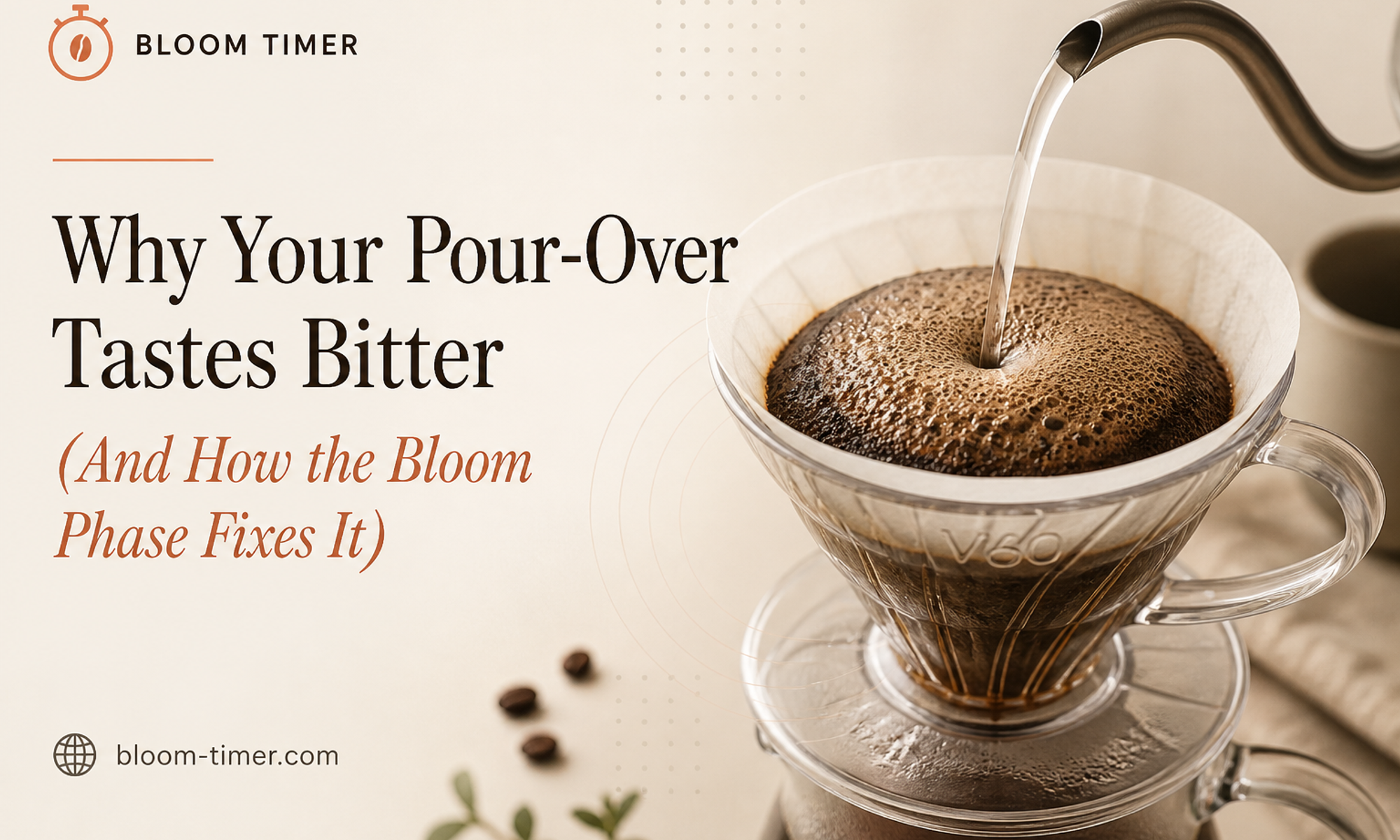
You buy good beans, you weigh your dose, you grind on a decent burr — and the cup still tastes like burnt cardboard. Before
you blame the roast, look at the first thirty seconds of your pour. The bloom phase is the single most under-rated control in
pour-over coffee, and most beginners either skip it, rush it, or drown it.
This guide is short on theory and long on what to actually do.
What the bloom actually is
Fresh coffee is full of trapped CO₂ — a byproduct of roasting that keeps escaping for two to three weeks after the bag is
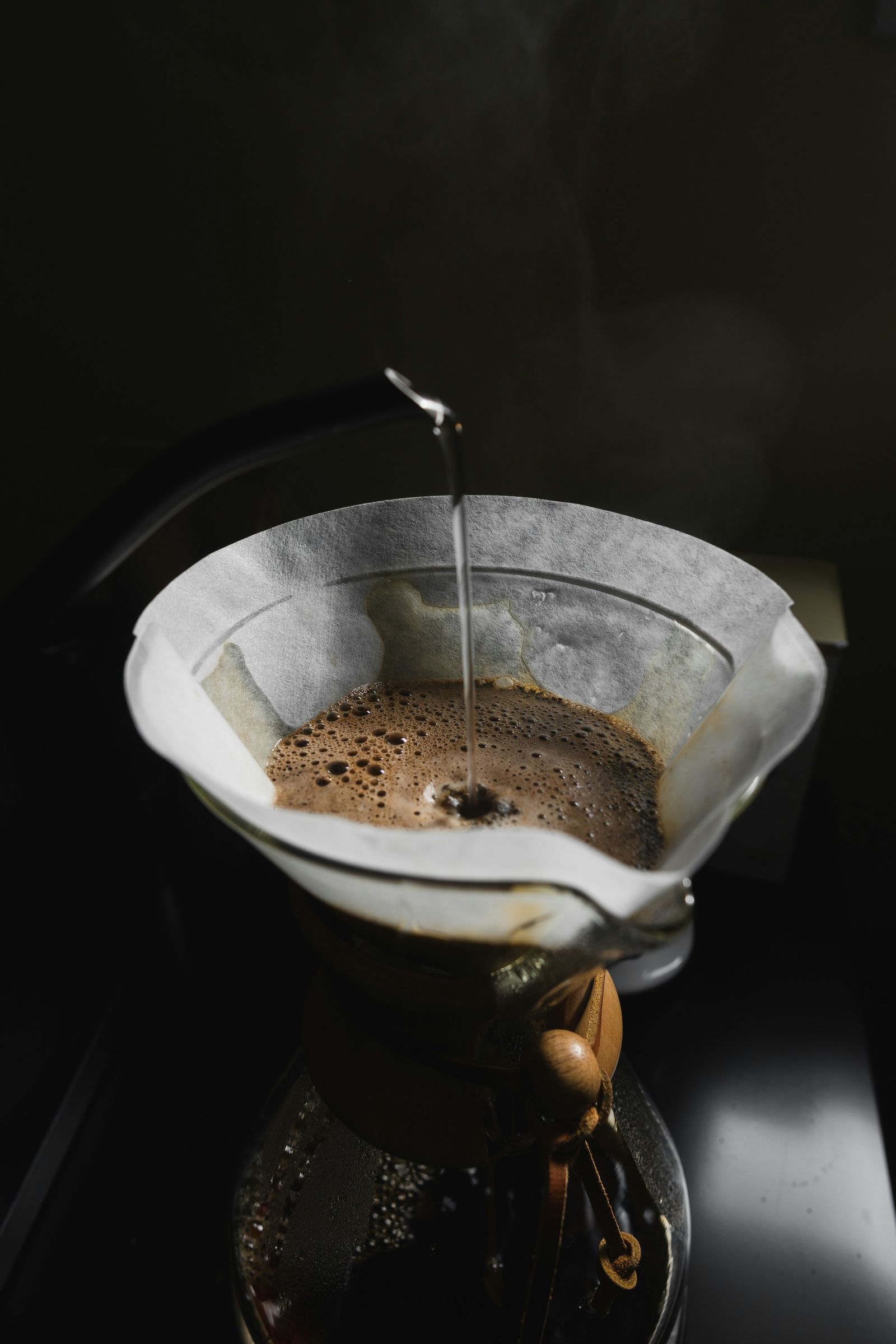
opened. When hot water first contacts those grounds, the CO₂ rushes out as a visible foam dome. While that gas is venting, the
water cannot fully wet the grounds. Anything you pour during that window slides over the surface, channels around the dry
pockets, and pulls only the most soluble (read: bitter) compounds.
The bloom is the pause that lets the gas escape so the rest of your pour can extract evenly.
Why skipping it tastes bitter
Without a bloom, three things go wrong at once:
1. Channeling. Water finds the path of least resistance through dry, gas-pocketed grounds and rips through the same channels
for the rest of the brew. The grounds along those channels over-extract; the rest under-extract. You taste the over-extracted
ones — they're loud.
2. Uneven saturation. Some grounds get five seconds of contact, others get fifty. The fast ones contribute sour and grassy
notes; the slow ones contribute the harsh, ashy bitterness you're trying to avoid.
3. Trapped acidity, lost sweetness. The compounds responsible for sweetness and body extract slowly and need full saturation
early. Skip the bloom and you back-load extraction, which means more bitter, less sweet.
How long should the bloom be?
The honest answer is: it depends on the beans, but 30 seconds is a safe default and a good number to start measuring against.
If your beans are very fresh (under a week off-roast), push to 40–45 seconds — the dome will still be rising at 30. If they're
three or four weeks old, 25 seconds is enough; there's not much CO₂ left to vent.
Watch the dome, not the clock. The bloom is "done" when the surface stops actively rising and starts to flatten or crack. That
is the cue to start your main pour. A timer is a guide, not a referee.
The bloom recipe (works for any dripper)
Coffee : water for the bloom should be 1 : 2 by weight. So for an 18 g dose:
1. Tare your scale with the dripper, filter, and grounds on it.
2. Pour 36 g of water in a slow spiral from the centre outward, just enough to saturate every ground. Don't drown them — you
want a wet bed, not a swamp.
3. Give the dripper a single firm tap on the counter to settle the bed and burst surface bubbles.
4. Wait. The dome rises, peaks, and starts to settle. That's your signal.
5. Begin the main pour at the 30-second mark (or whenever the dome flattens — whichever comes first).
If you want one less thing to think about while you're doing the rest of the brew, https://bloom-timer.com/ does this with one
tap.
Three signs you're nailing the bloom
- Dome shape, not a puddle. You'll see a smooth, rounded mound of foam, not a shiny flat surface. A puddle means too much
water, too fast.
- Even colour across the bed. Spots of lighter brown mean dry pockets. Re-pour next time with smaller, slower spirals.
- Audible hiss for a few seconds. That's CO₂ doing exactly what it's supposed to do.
What this won't fix
If your grind is way off, your water is bad, or your beans are stale, the bloom can only do so much. A good bloom is a
multiplier on a decent setup — not a rescue mission. But of all the variables in pour-over, it's the cheapest one to dial in:
zero new gear, thirty seconds of patience, immediately better coffee.
Try it on your next brew. Skip everything else you were about to change.